Opinion: Stop charging companies for bogus Android patents. Yes, they’re still doing it!
I’m an old Linux and open source software user, writing this article on Linux Mint 17.3 desktop using LibreOffice 5.1. Although I know Microsoft has made some changes, I don’t really believe Microsoft has changed its anti-open source stance.
Let’s look at what Microsoft has done. In 2014, Microsoft CEO Satya Nadella publicly declared that Microsoft loves Linux. Even former Microsoft CEO Steve Ballmer, who once called Linux a “cancer,” now thinks Microsoft’s move toward open source software is a good direction.
This isn’t Microsoft’s latest initiative. As early as 2008, Sam Ramji, then director of platform technology strategy at Microsoft, said, “Microsoft’s open source strategy focuses on helping customers and partners succeed in today’s diverse technology world.”
Talk is cheap, code is king, and Microsoft has indeed delivered.
At the beginning of 2016, Microsoft announced the development of SQL Server on Linux, integrated Eclipse and Visual Studio, released an open source network switch based on Debian Linux, and added RedHat RHEL to its Azure hybrid cloud.
This is just part of it. Last year, Microsoft worked to bring .NET Core to Linux, supported Debian GNU/Linux on Azure cloud, and even had its own Linux certification. On this basis, it provided open source Hadoop big data software on Ubuntu. Microsoft even has its own Linux distribution—Azure Cloud Switch.
But why, despite all these open source initiatives, do many open source enthusiasts and developers still not trust Microsoft?
Some people hate Microsoft because they think it’s playing the old “Embrace, extend, and extinguish” trick. But I don’t think so. Microsoft has indeed released a lot of code under open source licenses, and there are no hidden traps here.
Others hate Microsoft simply because they’ve always hated it. For them, today’s Microsoft is no different from the Microsoft that funded SCO’s attack on Linux from the 1990s to the early 2000s. This is also not true.
More and more people in the open source community realize that Microsoft in 2016 is no longer greedy, no longer the Microsoft of the Bill Gates and Steve Ballmer era.
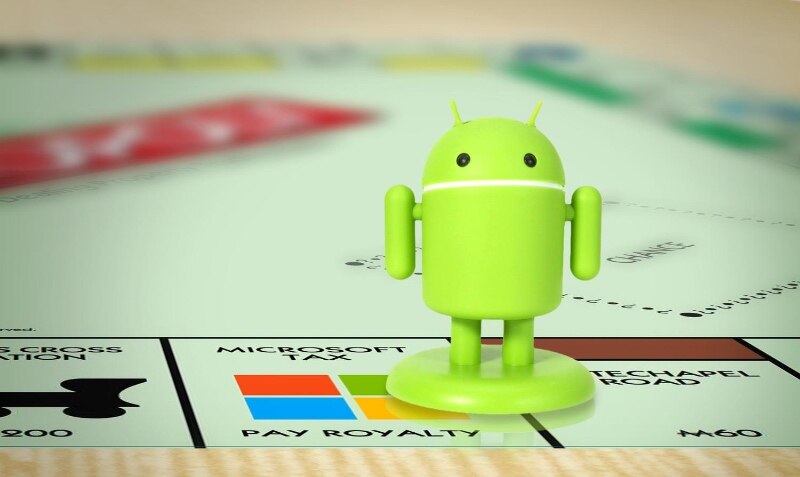
However, there’s one thing that prevents open source people from truly trusting Microsoft: Microsoft is still requiring Android manufacturers to pay Android patent fees. In early March, Microsoft signed two more Android patent licenses.
Every time I write an article about Microsoft’s open source progress, readers tell me that if Microsoft is really an open source advocate, it should stop forcing other companies to pay for its bogus Android patents.
Bogus? Yes, bogus!
According to information published by China’s Ministry of Commerce, we know Microsoft has 310 patents related to Android. According to a report by M-Cam, a global financial institution focused on intellectual property and intangible assets, the patent content involved in Microsoft’s Android patents is already “part of the public domain”.
This is one reason why Microsoft reached a patent settlement with Google/Motorola in September 2015. Microsoft didn’t give up its patents, but it stopped charging Google for them.
So why do people prefer to pay rather than fight patent lawsuits? Because patent litigation is very, very expensive. People would rather pay a small fee of $5 to $15 per device than take a chance in court.
And Microsoft? In 2014, Microsoft earned $3.4 billion from its Android patents. Samsung alone paid Microsoft $1 billion a year in Android patent fees. That’s a lot of money even for Fortune 500 companies.
In the most recent fiscal quarter, volume licensing and patents accounted for about 9% of Microsoft’s total revenue.
That’s why Microsoft will never stop charging for Android patents. The Redmond giant gets billions of dollars annually from these patents, and it won’t give that up.
Why? Although some open source programmers don’t like Microsoft’s patent trolling, major open source companies like Canonical and RedHat still work with Microsoft.
The bottom line is the bottom line. Anyway, those hardcore free software developers will never trust Microsoft, so what? As long as Microsoft can continue to collect Android patent fees while collaborating with open source companies, it has no reason to stop.
Reprinted with permission: Developer Relations »