Is Open Source Eating the World?
(Thanks to Dominic Alves for the header image! CC BY 2.0)
The phrase “software is eating the world” was first seen in 2011. In 2015, open source software took its place.
“If software is eating the world, then open source will chew it up and swallow it, right?” Forbes tentatively asked at the beginning of 2015 in an article titled “If software is eating the world, then open source will chew it up and swallow”. By the end of the year, they confidently declared “Open Source Software Is Indeed Eating the World.”
This wasn’t a movement driven by a single voice. Wired published articles like “2015 Was the Year Open Source Software Went Nuclear”, filled with quotes like: “This isn’t just a turning point, it’s a tipping point,” said Brandon Keepers, a GitHub leader.
This also appeared at various conferences, like Defrag2015. I attended a talk titled “Open Platforms and Strategies—Why You Should Open Your Platform.” There, I heard bold predictions, such as: in about five years, most products will be open source on platforms like GitHub.
Will open source software dominate the world? Will all licenses in the future be GPL, MIT, Apache, etc.? Of course not. Linux, Netscape, and Apache httpd have been in open source foundations for a long time.
If that’s the case, why was there such excitement in 2015?
git commit -m “What Changed”
Predicting the future is futile. As Philip Tetlock’s experimental research demonstrated, experts are “about as accurate as dart-throwing chimpanzees.”
Therefore, trying to predict the future of free/open source software might lead us astray. Let’s look at what’s happening now. My argument is that open source and closed source have always been complementary. The trends we see now are largely the winners emerging from the holy wars between open and closed.
Hybrid Organizations are Mainstream
Open source software is mainstream. Apple, arguably the most closed company, open-sourced Swift. Microsoft open-sourced Visual Studio, .NET, and more recently their JavaScript engine Chakra. Google, Facebook, and even the NSA host and open-source their projects on GitHub.
However, many of these organizations are also fundamentally closed source. Why the hybrid approach? Joel Spoelsky gave us an explanation in his 2002 paper on complementary markets:
“When the price of a complement to a product falls, the demand for that product increases. In general, it is in a company’s strategic interest to make the price of its complementary products as low as possible.”
What’s better than free? Sun Microsystems opened Java because their main business was selling servers. What do you need after building a cool Java application? Of course, a server to run it on.
Abstract Expressionism
Our friend Joel also expressed other benefits of open source in a recent a16z podcast:
“We’re coding systems that are a million times more complex than they were in the past. (…) Today, with a single line of code, you might accept and process a credit card. (…) As programmers, we are much more powerful.”
The more areas software occupies, the more interconnected the world becomes. Development also becomes more complex. Free/open source software is a way to navigate all this complexity.
If we believe that entropy increases over time, we can make this prediction: if open source effectively slows entropy increase, then open source adoption will grow as entropy increases.
Notably, Twilio, Stripe, and their brethren present a clear challenge to this model. They have closed SaaS products that also do a lot to eliminate complexity. The issue is that it’s hard to declare either open or closed solutions as the “winner” in multiple dimensions.
Desperately Seeking HIPAA (Simplified)
Stripe, Twilio, and similar companies all promote open source, but all of the above companies offer closed-source services distinct from open source. Why?
Closed-source services provide things like PCI compliance, no-call registration, HIPAA compliance, and even easy-to-learn features, allowing you to focus on your core business logic. More and more companies are willing to pay for closed-source services to reduce burden and avoid headache-inducing integration issues.
I firmly believe this won’t change. Building on the excellent abstractions provided by closed-source services will better enable your company’s business. Hide the trivial details, provide practical functionality. Closed-source services excel at simplifying complexity.
FOSS Evangelists Replaced by Neutralists
It’s a myth that open source is mature. We often see declarations like “There will never be another Red Hat.” a16z’s Peter Levine says that if open source is a business option, it’s usually not the most effective one in the market.
Revenue matters. Any product needs support. Will it continue to be developed and maintained? Satirical Twitter worries:
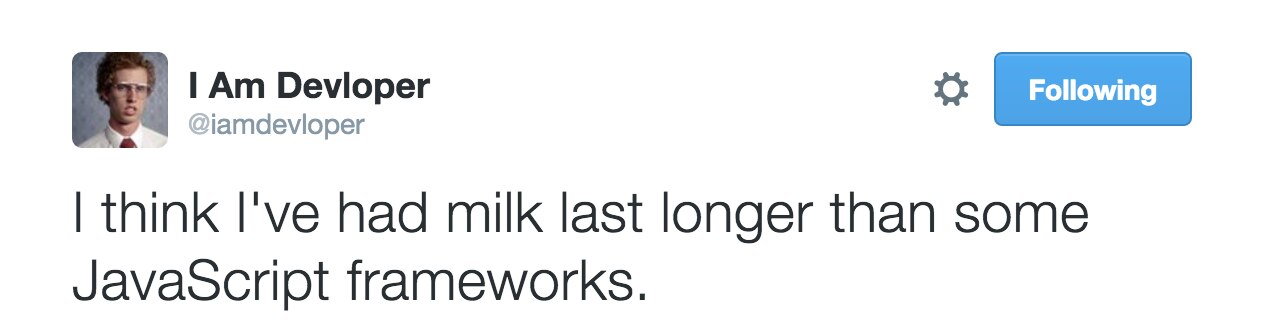
I think I’ve had milk last longer than some javascript frameworks
“I think some JavaScript frameworks have a shorter lifespan than a bottle of milk”
Similarly, FOSS’s core principles are being questioned. Remember the Heartbleed vulnerability (HeartBleed)? Jeff Atwood certainly does. He used it to challenge
Linus’ Law (one of the development testing laws familiar to computer software developers), which was enshrined in The Cathedral and the Bazaar (a book introducing the open source software model).
Linus’ Law states, “Given enough eyeballs, all bugs are shallow.” In other words, open source software shouldn’t have catastrophic bugs because enough people are publicly reviewing the code, so only small bugs might slip through.
Atwood responded:
However, the Heartbleed SSL vulnerability is a turning point for Linus’ Law. It’s a catastrophic vulnerability caused by a serious error in open source software. How catastrophic? It affected about 18% of all HTTPS websites in the world, allowing attackers to view traffic to all those sites, unencrypted… and it was there for two years.
Ouch. Atwood’s current company, Discourse.org, is a 100% open source product. He clearly has confidence in free/open source software. It’s just been tempered by the real world.
Ease of Use
GitHub is the haven for open source. On it, writing and sharing code has become much easier. Amateurs can improve documentation even if they can’t code. Experts can easily share and mentor through pull requests.
It’s poetic that a distributed version control system (git) replaced centralized version control systems (svn) and had such a big impact on free/open source software. Do you want to solve a problem? First check GitHub for a solution.
Any rational business would be foolish to ignore open source. But how does GitHub make money? By selling private repositories. Many of which are closed source. Even GitHub is in this game.
The future isn’t a pure open source wonderland. It’s a patchwork that combines open and closed source.
A Little Bit of Both is Beautiful
There is no eternal conflict between open source and closed source software. Microsoft was once the champion of closed source. If you’re a veteran, you can still read stories of their wars.
Today, Microsoft fully embraces the free/open source software trend. Like many other companies, they develop many closed source projects while participating in open source. Hey! This is also ironic. We love open source solutions like Docker, Golang, and Rails. We also rely on closed source solutions like Slack.
Modern businesses need to fully embrace both worlds. Google, Facebook, and Uber are successful examples of this enlightened approach. They prove that you can leverage open source without having your lunch stolen.
The holy war is over. The competition between open source and closed source needs to end.
Reprinted with permission: Developer Relations »