
Author: Hoss
Compiled by: Zhuang Qi
Public APIs only create value for providers and consumers when they are used. This has led to continuous growth in the field of attracting and supporting developers in recent years. Individuals and teams with developer relations can help developers discover and better use APIs and other technical tools. These roles used to exist only in large enterprises, but today, developer relations is common in medium-sized enterprises and even startups.
Here, I will introduce three areas that frequently interact with developer communities:
1️⃣ Developer Experience
2️⃣ Developer Relations
3️⃣ Developer Marketing
You may find them described in other forms, but this doesn’t affect them being the core of developer support. They play a crucial role in attracting and retaining developers.
| Developer Experience: How You Guide the Developer Journey
When developers discover that your API meets their current needs, they may try to use it. At this point, your developer onboarding determines whether they can get started quickly. Developer onboarding is your earliest interaction with developers, which will leave them with the initial developer experience of the product. Product development guidance is one of the key factors affecting whether developers continue to use your API.
This laissez-faire developer support model requires many supporting factors. It needs to combine product decisions, UI elements, and technical education. If you can figure out why and how to use your own API, then you can help developers achieve their goals.
A robust developer experience product makes it possible to quickly answer developer questions and help them move to the next step. In communication with developers, various forms of documentation are the most valuable tools. Because of this, you need to provide developers with various types of documentation so they can develop smoothly. You need to ensure all of the following conditions are met (if applicable):
✅ Getting Started Guide
✅ Tutorials
✅ Up-to-date Reference Guide
✅ Application Examples
For example, Deepgram meets developers’ needs in its documentation website:
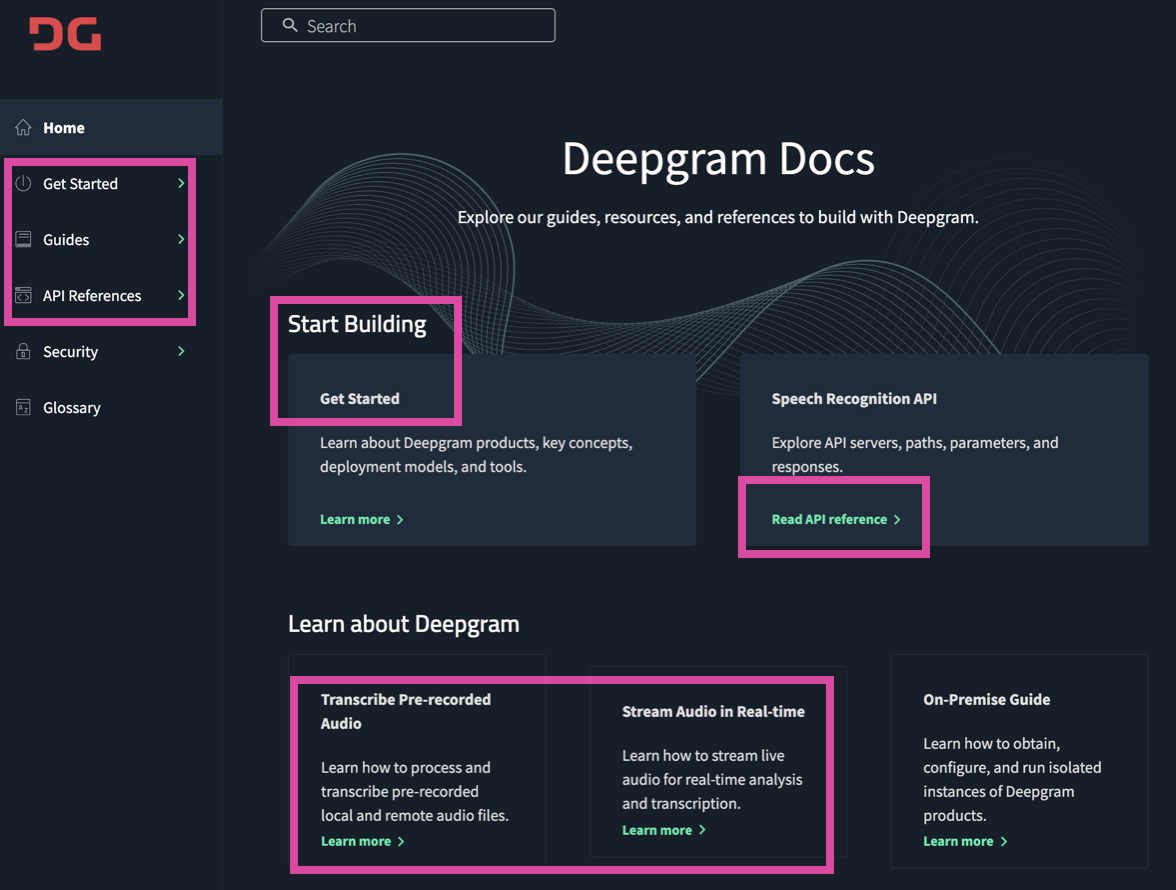
For those new to Deepgram, it provides a getting started guide. Complete reference materials are useful for experienced developers to quickly browse content and check syntax. Finally, combining the getting started guide and application examples provides a complete usage experience for developers using the product for the first time.
Of course, the specific content of documentation will vary depending on different APIs. This is a good opportunity to connect with users, utilize your product knowledge, and customize documentation by understanding users’ real needs. Make sure you avoid the following 10 common developer experience mistakes.
✅ No getting started guide
✅ No clear development process
✅ Paid services
✅ Overly cumbersome registration process
✅ No sample applications
✅ Limited programming language support
✅ Outdated API reference documentation
✅ Not enthusiastic about blogging
✅ Poor website browsing experience
✅ Mini (or non-existent) developer panel
Although self-service developer experience is great, remember that developers are people too. Many times, direct interaction and support can release their full potential. Let’s look at how developer relations can amplify developer support.
| Developer Relations: Programmers Helping Programmers
Communication is a key element in developer onboarding, but it doesn’t have to appear in every aspect of developer experience. Although self-service developer experience is great, having a friendly face help users solve problems that have been stuck for a long time is also nice. No documentation can cover everything, and it won’t have empathy like a person. At this time, developer relations can fill this gap well.
In developer relations, some common titles you’ll see include:
✅ Developer Advocate
✅ Developer Evangelist
✅ Community Manager
Depending on the title and organization, exact responsibilities may vary, but in general, the responsibility is to help developers succeed. Google pioneered the “Advocate” position, which also includes bringing product feedback from outside into the company (becoming an internal ambassador for external developers). In contrast, “Evangelist” faces outward, promoting the company’s latest technology developments. In practice, some advocates may mainly be responsible for promotion, while some evangelists will bring profound insights back to their products.
Although from the developer onboarding example, developer relations looks like customer support, this is just one form of communication. Developer relations practitioners also help developers by participating in events, hosting programmer online conferences, joining open source communities, and other ways.
Even after integrating your API, developers may still encounter some questions that documentation cannot answer. This may be related to their specific development situation or industry. In traditional development situations, developers might try back and forth among those StackOverflow answers of unknown correctness. But the existence of developer advocates, developer evangelists, or community managers can quickly provide developers with a correct direction and useful perspectives.
Throughout the developer’s development process, if you operate developer relations, it’s important to take necessary measures to maintain it. Gathering developers within a community is a good way to both help developers and maintain developer relations. Of course, these communities can be self-created, such as specific product forums, or utilize existing platforms, such as Twitter and Reddit. We can also learn about developer communication methods through Twilio.
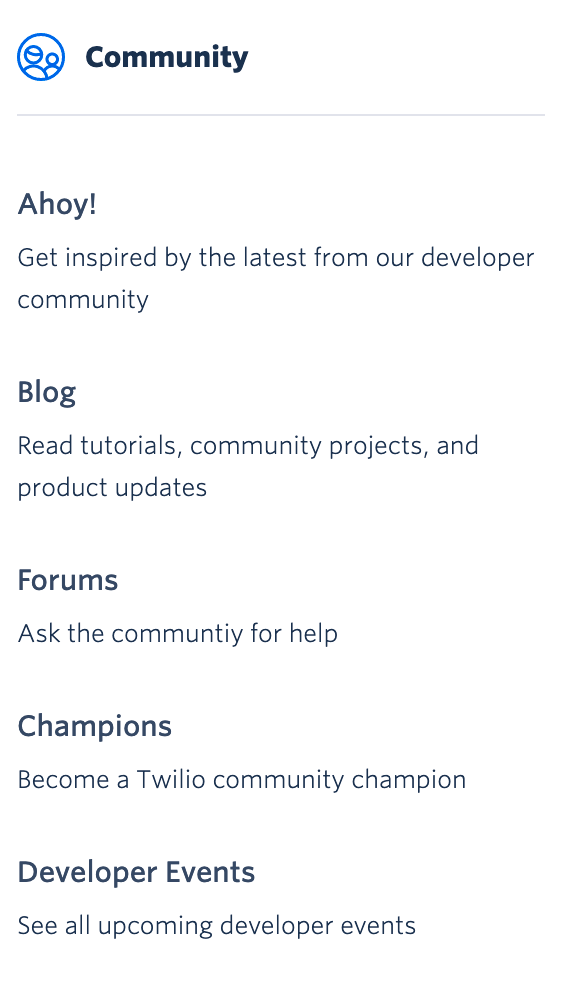
Each community platform has its own advantages, and using one platform doesn’t mean excluding others. Through existing platforms, you can reach developers who don’t yet know your product can solve their problems. And having a community centered on your own product, you can create a content-rich and active communication platform for developers already using the product.
As you can see, communicating with developers is very important, but this requires them to know that your product can help them solve problems as a prerequisite. Next, let’s look at what can be done to help developers understand the product’s existence.
| Developer Marketing: Finding Your Technical Audience
Before developers experience the product for the first time or ask advocates questions, developers need to know you exist. Like other fields, marketing can help you find the corresponding audience. But unlike other fields, developers are relatively resistant to most marketing activities, so you need to approach marketing activities with respect.
But fortunately, most developers improve their abilities by constantly learning new knowledge. So before they come into contact with the product, they can know that the knowledge brought by the product can help them improve their abilities. Then developers may not be so resistant to product promotion information and will accept this information.
Some common and effective developer marketing strategies are:
✅ Events and webinars
✅ Content marketing
✅ Community sponsorship
You can use any of the above methods where developers frequently appear.
When you participate in or host events, bring new things to developers along with you. Help them understand fresh technologies, or help them better understand how current technologies work. Note that when promoting your own products, keep a low profile, downplay your own product’s presence, and communicate and discuss with developers around specific solutions.
You can do the same in SEO-focused content marketing and advertising-focused community sponsorship. Show your importance, and developers will be happy to accept you. Use other strategies, such as retargeting ads and email newsletters, to maintain attention.
For example, Snowflake cloud database summarized information into this email:

This is a Snowflake marketing case about solving specific problems. In the Q&A session, it provided the opportunity to ask questions to product technical experts (maybe the developer relations team). Then, all these resources are bundled in content so that more developers can be attracted to their platform in the future.
Of course, if you want to package these resources into a framework, providing developers with a better experience and close contact with the expert team. Then the intensity of product support for developers determines whether developers will continue to use the product for a long time. When designing products, you can refer to Hoss’s developer center, which not only carries developer documentation but also provides a complete developer support experience.

Reposted from: Developer Relations »