Author’s note: Most of this article was completed in mid-September this year, coinciding with the annual Qiantang River tide, which gave me a lot of inspiration. At that time, I was busy with the SFD event in Beijing, so I didn’t finish it. Now I supplement and modify some at the end of the year, so I post this article.
First of all, a declaration: the views in this article are just my own thoughts, for reference only.
I often hear some commercial promotion: “The ‘open source wave’ has surged in”, as if the aunt is coming and everyone is not ready for sanitary napkins. So putting aside these commercial promotions, how did open source, a foreign import, take root in China? We might as well organize it a little, segment evaluate the so-called “open source wave”, and try to segment the process of its promotion in China in a “periodization” way. In doing so, in addition to clarifying the process of introducing open source into China, we can also analyze the role of people behind open source, interest demands and their ultimate goals.
This “periodization” analysis of open source originated from a brainstorming session with a former CSDN colleague at the beginning of the year. We suddenly found that open source in China presents an interesting situation of alternating highs and lows. Compared with the magnificent of the high tide period, the low tide period is undercurrent surging, which can be said to be equally important. Therefore, we decided to try to make some analysis and interpretation of this process.
The First Wave of Open Source in China (1999-2002)
- Symbolic event: Release of Red Flag Linux, Blue Point Linux, etc.
- Peak characteristics: Pioneering work, pathfinders
- Low tide period: Internet bubble, giving birth to low-cost and broader Internet demand
In 1998, Richard Stallman of the Free Software Foundation came to China for the first time and gave a speech at Tsinghua University. Later, in 1999, the US air strike on the Chinese Embassy in Yugoslavia gave many people a great stimulus, thus giving birth to China’s strategic decision to have its own independent and controllable CPU and operating system. Subsequently, under the “care” and guidance of the government, China’s independent operating system began to be developed. Inevitably, the open source Linux system was chosen, and the leader among them was undoubtedly Red Flag Linux. From the release of the first version of Red Flag Linux in 1999 to the collapse of Red Flag in 2014, over a period of 15 years, Red Flag Linux laid a solid foundation for China’s open source, making outstanding contributions in many aspects such as application software localization, domestic software standardization, software development process, and government procurement of domestic operating systems. Many early translations of Linux components, desktop environments, and documentation, as well as Chinese documentation writing, were mostly contributed by Red Flag employees, which also accumulated a lot of technical foundation and talent reserves for the later promotion of open source in China. In a word, during this period, open source mainly occurred in government promotion, universities and research institutions, and it was still a high-level demand, based on the demands of national industry and information industry for independent control.
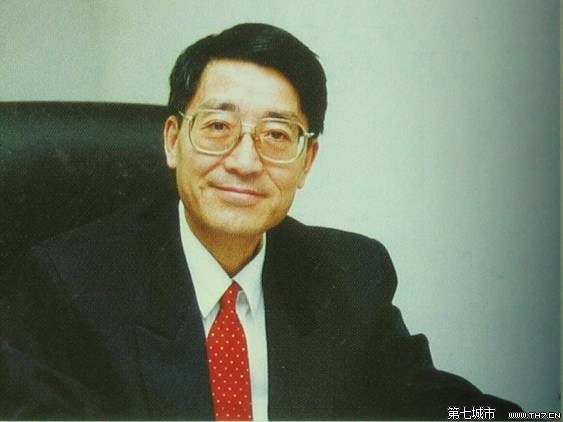
Sun Yufang, the initiator of Red Flag Linux
During this period, in addition to Red Flag Linux, there were also some operating systems developed by companies such as Blue Point Linux, which were promoted under the banner of replacing Microsoft Windows. Their joint efforts gave Chinese people the first opportunity to contact Linux and the world’s open source trend. However, because there were not many people with computers at home at that time, and Microsoft’s strong promotion in China, the promotion of desktop Linux encountered great difficulties. The 2000 Internet bubble aggravated this trend. Because of the government background, Red Flag Linux survived, but the operating systems developed by private companies such as Blue Point Linux gradually died. During this long low tide period, the LinuxWorld conference introduced from foreign IDG enriched the Chinese open source world at this time, setting off the next wave in the undercurrent surging…
The Second Wave of Open Source in China (2005-2006)
- Symbolic event: Successful holding of LinuxWorld China
- Peak characteristics: Commercial open source comes to the fore
- Low tide period: Technical talent reserve and community cultivation
In fact, the documented LinuxWorld China can be traced back to 2000, and it was held for 8 consecutive years until the last session in 2008! LinuxWorld China developed a large number of open source enthusiasts in Beijing, Shanghai and Guangzhou. Such a commercial exhibition and exchange meeting provided a catalyst for the commercial development of open source in China, giving Linux server applications, databases and early desktop Linux the opportunity to communicate and display, and contributing outstanding strength to promote the development of the Internet industry and information technology. Among them, the two LinuxWorld China in 2006-2007 were the most grand and eye-catching. International well-known open source companies such as Red Hat and Novell participated in the exhibition, and opened successful cases of enterprise applications for Chinese open source people. At the same time, domestic large companies such as Red Flag Linux and Lenovo also launched their own open source enterprise-level applications.
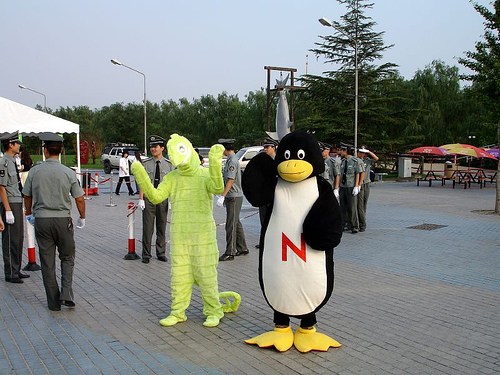
LinuxWorld China 2006 (picture from ChinaUnix)
Exhibition is exhibition, but it opened a window for enterprise-level applications of open source, stimulated more enterprises to join in, and also promoted the reserve of technology and the cultivation of talents. Many famous “high-end” people in the industry (some of whom have indeed made outstanding contributions) were absorbed into the open source wave during this period. At the same time, it should be noted that because commercial exhibitions are only scratching the surface and do not have enough public participation, the driving effect on open source at this time can only stay at the enterprise level, paying attention to application rather than contribution. Therefore, the two LinuxWorld China in 2007 and 2008 showed a decline and ended hastily.
The Third Wave of Open Source in China (2007-2010)
- Symbolic event: Wang Kaiyuan holding a sign “Free Software, Open Source” during Bill Gates’ speech
- Peak characteristics: Desktop operating systems benefit the public, open source communities grow, but the quality is poor and the quantity is large, difficult to maintain, and at the same time has anti-commercial characteristics, multiple demands coexist, multiple ideas advance together.
- Low tide period: Community washing in the tide, leaving fine products. A small number of community contributors emerge, and high-quality members are seriously lost. Social living standards decline, focusing on short-term benefits.
At around 9:45 am on April 20, 2007, Bill Gates participated in the Peking University Innovation Activity Conference. A man suddenly rushed to the stage and shouted: “We need open source software, need freedom!” and raised his card - “Free Software, Open Source”. This man who rushed to the stage was Wang Kaiyuan, and this day became the beginning of the third wave of open source in China. At that time, Wang Kaiyuan was planning to develop a website OSDN to promote free open source at CSDN, which was later left unfinished because of this incident. I once interviewed a few remaining old employees of CSDN who were familiar with him. Everyone commented that he was “talking a lot” on weekdays, full of “freedom” and “open source”, opposed to Microsoft without knowing why, but had no substantial results. Regardless of Wang Kaiyuan, his bold move during Gates’ speech at Peking University, through the exposure of news media and the extensive exposure and hype of the emerging Internet media, made open source and free software enter the vision of ordinary people for the first time, and also opened the most magnificent chapter of the open source wave in China!
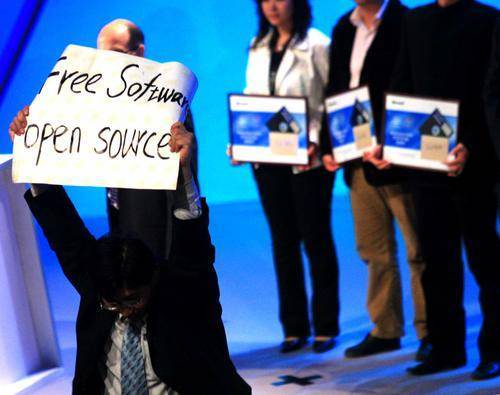
Wang Kaiyuan holding a sign during Bill Gates’ speech at Peking University in 2007
From a global perspective, around 2008 was also the year when open source emerged most prominently, and it was the year when new members and new communities emerged like mushrooms after rain. Thanks to the increasing maturity of desktop Linux (such as Ubuntu, SUSE and Red Hat), covering more hardware and PCs, and the objective increase in the popularity of computers, all promoted the deeper spread of open source to the vision of ordinary people and broadened its application scope. During this period, with the failure of Microsoft Vista system, its monopoly became more and more serious, and the prevalence of viruses and rogue software, people paid more attention to personal privacy, information security and free software, which created a rare opportunity for the output of world outlook and values of free open source. But overcorrection, at this time some open source anti-commercial characteristics appeared, excessive idealism and extreme ideas emerged, which were also affected in China. At the same time, China’s temporary opening of doors due to the Olympic Games allowed the public to directly connect with the world’s open source trend. During this period, a large number of Linux communities (such as Linux user groups around the country) and other open source technology communities rose and flourished, such as Huamang Community, Huihu Gray Fox, Mozest and other open source communities with strong influence entered maturity. Accompanied by various open source-related conferences and exhibitions, the Software Freedom Day (SFD) activities spread all over the country. For example, the 2008 Beijing SFD activity and the first GNOME.Asia left a deep meeting for many people. The huge influence emitted by these conferences and exhibitions also provided a strong opportunity for the popularization of open source.
During this period, many members joined the open source community, from all walks of life, with different levels and great differences in values, including many “leechers”, many onlookers, and many people who expect something for nothing. Many people who joined during this period had a strong realistic interest demand, or had the values and mentality of expecting investment-return, such as for personal career or simply for speculative wealth. These people were not satisfied in this wave, and they would appear again, so I named this group of people “08 School” (because they joined during 2008).
At this time, the promotion of open source pursued more user growth, rarely mentioned contributors, and even fewer core contributors. Of course, this is also the necessary path for open source promotion. Therefore, although there are many communities and many people, those who have the ability to contribute are difficult to keep up. As a result, in the later period, many small communities began to disintegrate, or followed commercial interests, becoming cannon fodder in commercial wars. And many community activities changed from technical activities to eating and drinking, with little technical content, all of which led to a large loss of community members. From a macro social perspective, during this period, housing prices were high, prices rose, the gap between rich and poor increased, people’s living standards were worse year by year, and people began to pay more attention to real interests and short-term benefits, no longer interested in the long-term contribution and return value system of open source. Social contradictions became more prominent, social stratification became more serious, and people’s demands became more diverse and complex from simple economic demands, emphasizing individual freedom. The universal values of freedom and democracy advocated by free open source will definitely affect the community members involved, which laid the groundwork for the development of the later wave.
The Fourth Wave of Open Source in China (2011-2012)
- Symbolic event: (None)
- Peak characteristics: Cloud computing, big data and mobile Internet become the mainstream driving open source industry, government driving force weakens.
- Low tide period: Open source hardware matures late, open source entrepreneurship is emerging, open source participants reshuffle
This fourth wave came quickly and went quickly. With the massive development of foreign cloud computing and big data, domestic companies were not to be outdone, especially the massive investment of large companies such as Alibaba, which gave open source applications a broader world at the enterprise level. This is just as Eric S. Raymond predicted in his famous article “The Cathedral and the Bazaar”, the infrastructure of the Internet will first apply open source software, while the application level will introduce open source later. At the same time, the rise of domestic mobile phone manufacturers such as Xiaomi, Huawei and ZTE injected new vitality into the mobile Internet, and the development of open source application software burst out here. At the same time, open source commercial applications were valued and understood by more people, and more manufacturers saw the characteristics of open source development and coveted the cost reduction and efficiency improvement brought by low-cost community development.
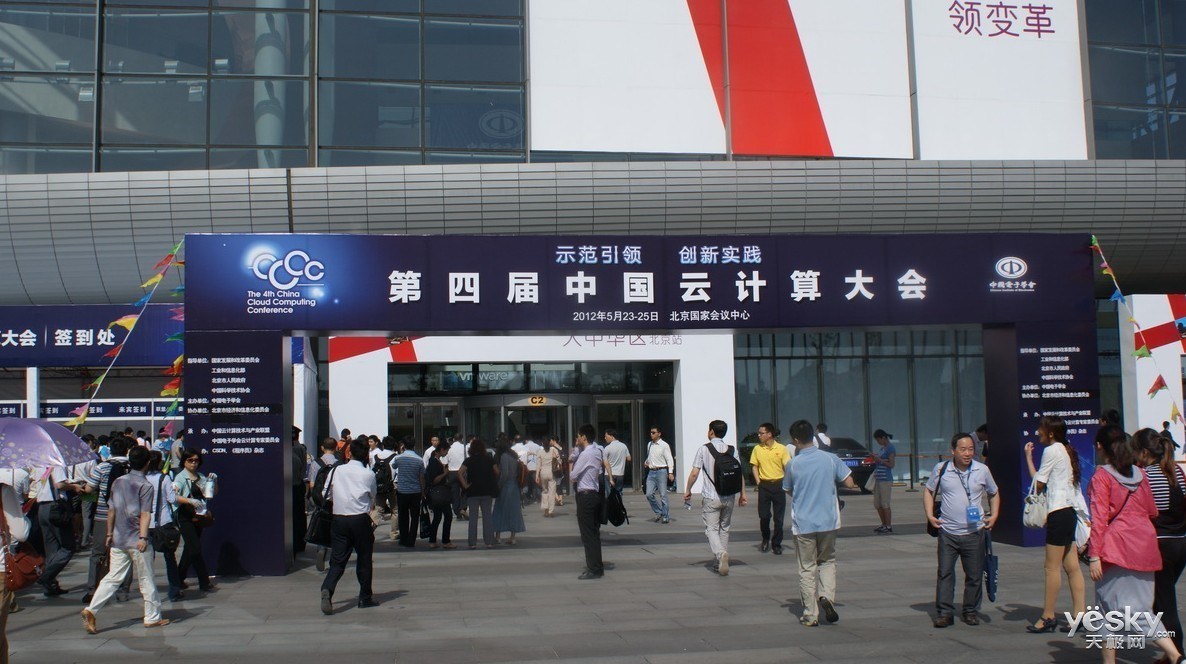
2012 Cloud Computing Conference (picture from the network)
But because of the wrong method, this wave receded quickly. The reason is actually very simple, because the power of the community was not mobilized. At this time, after the baptism of the third wave, many large communities split into small communities, entering a period of reshuffling, with very weak influence and independence. In addition, many open source developers were not in the community, floating outside the community, resulting in the inability to organize effective community development. This led to Android and iOS application development often forming their own systems, unable to integrate into existing open source communities (because the actual open source community was too weak), giving people a feeling of inability to continue. Of course, enterprises were not stupid. After finding that there was no community support for development, they planned to establish open source communities based on product development. Later, in order to operate such developer communities, a new position was born - “open source community operation” or “developer relations”.
Another important feature of this period is that the government’s influence in the open source field almost disappeared. With the exposure of a large number of products that stole open source code and claimed “independent innovation”, people began to dislike the government’s salty pig hands reaching into the open source field. And enterprises choose open source products based on interest considerations, the government’s promotion role is almost useless, at this time the official can only barely exert some influence through “core high-tech”.
Compared with the participation of large enterprises in the high tide period, the low tide period saw the rise of small companies. Starting from 2011, open source hardware represented by Arduino became really popular in China, and the term “maker” also entered the public vision and the news broadcast of CCAV. Maker spaces were established in major cities and universities in Beijing, Shanghai, Guangzhou and Shenzhen. Open source hardware entrepreneurship seemed to become a good medicine to solve the employment problem of college graduates. In fact, in this entrepreneurial wave, in addition to open source hardware, more were entrepreneurship based on open source software, especially represented by front-end development, personal cloud business and platform services. These start-up companies became the backbone of promoting open source.
China’s New Open Source Wave (2014-?)
- Symbolic event: Not yet happened
- Peak characteristics: The mature development and strong return of free open source software communities, becoming the backbone of promoting open source development in China.
Now, enterprises have deeply realized the importance of open source communities, and vigorously build and win over open source communities that are close to them. At the same time, after the baptism of the third open source wave, open source communities have eliminated a large number of unqualified communities through sifting through the chaff. Other communities have learned autonomous management through independent development, learned community overall planning, and understood how to guide and promote community-centered open source business models through communities. While maintaining neutrality and independence, they maintain positive interaction with multiple enterprises, absorb multi-level members, and become the core and main force of open source promotion.
The above is not a prediction. Similar examples are actually happening around us, such as old communities that have experienced big waves like Beijing Linux User Group and Beijing Python User Group, as well as emerging open source communities like Docker.CN. This will be a huge trend impact, and it will be a strong change in trend different from the past.
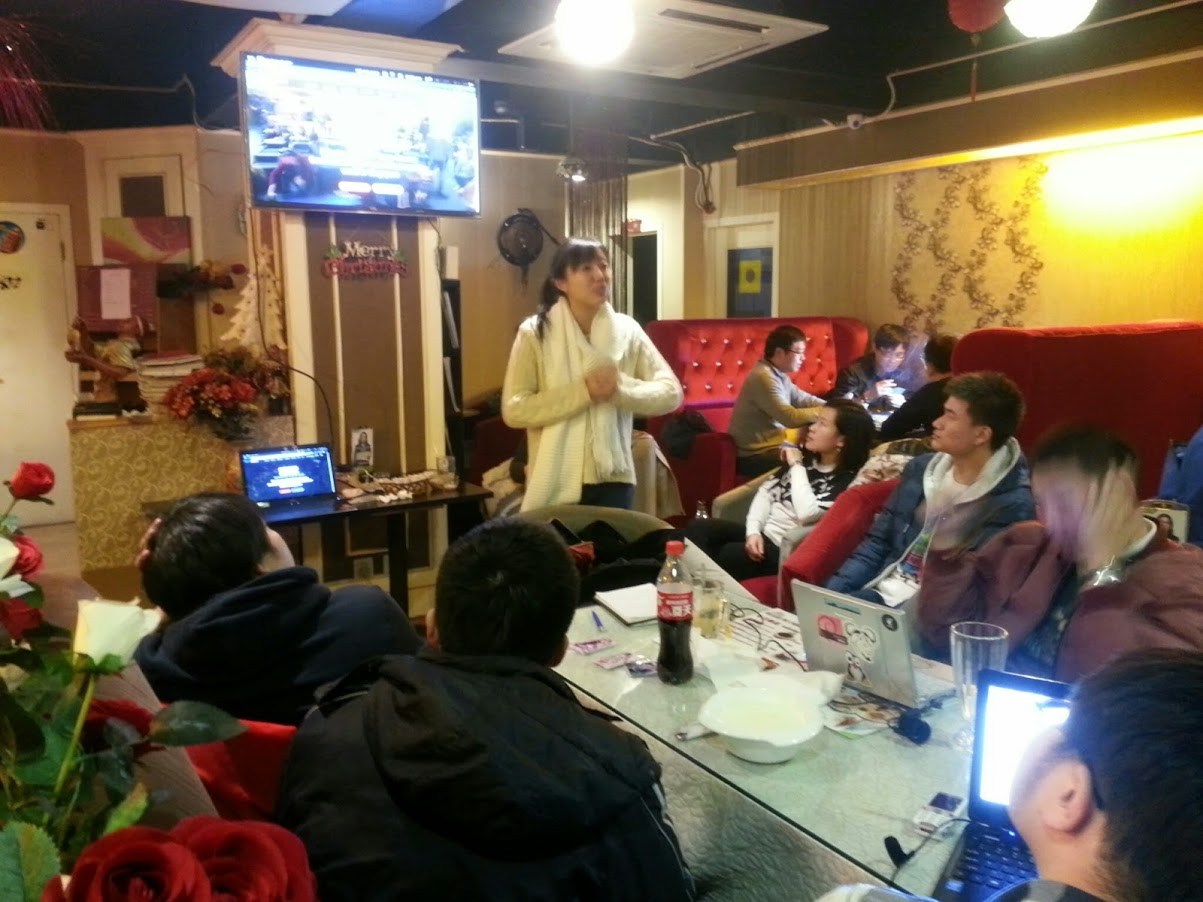
Offline activities of Beijing Linux User Group
Summarizing the four open source waves that have already occurred, it is not difficult to draw such a conclusion: China’s open source development follows a top-down development system from “government - enterprise - grassroots community”, that is, first led and promoted by the government, enterprise applications generate interest demands, and then community development caters to these interest demands. After communicating with some communities in the United States, Europe, South Korea, Japan, Singapore, Taiwan and Hong Kong in recent years, I found that foreign countries are often bottom-up, that is, initiated and led by grassroots communities first, enterprises guide community development through interests, and the government provides necessary assistance. China’s top-down system has great drawbacks. At the government level, because of uncontrolled power, it can arbitrarily interfere with and dispose of enterprises and communities; at the enterprise level, it can use the community to serve its commercial interests, becoming a cheap R&D department for the enterprise. At the same time, enterprise open source development is often only used by the enterprise itself, and will not benefit other related enterprises (for competitive considerations), becoming an exclusive benefit transmission tool for the enterprise. Therefore, this kind of development is basically equivalent to closed source and has no benefit to the improvement of the entire open source environment. In this way, open source in China becomes a closed cycle of interests.
As mentioned above, after the maturity and development of grassroots communities during the third wave, open source community members have accepted the universal values of freedom and democracy carried in free open source software, and will irreversibly pursue independent community growth, especially the group that was still students during the third wave, that is, the post-90s generation. They have realized that the premise of democracy is autonomy, and if open source wants to develop, it is fundamentally impossible to rely on “leechers”. Therefore, they should guide community members to manage open source communities through civic autonomy, simply saying “own open source community, own management”. After summarizing the various drawbacks that occurred during the third wave, the community has become more mature and guided the entire open source environment to develop in a healthier and more positive way, becoming a platform for promoting open source. At this time, the development of open source in China has evolved from a top-down system to a bottom-up grassroots breakthrough. It is precisely because of this that I named this wave China’s New Open Source Wave!
This process will not be smooth, but the trend is the trend, and no one can stop the mighty tide. At the same time, it should be seen that only when open source communities know how to use civic autonomy to manage communities and promote open source platform construction can they better win living space for themselves. On this topic, I will explain in the next article.
Those “Restoration” Events
There will be restorers in any historical trend. France has Napoleon III, China has Yuan Shikai and Zhang Xun. Every restoration is just a failed farce, but it is precisely because of these restoration footnotes that the mighty tide will be wonderful, just like the most spectacular return tide of the Qiantang River tide. The “restoration” mentioned in this article is quoted, without positive or negative emotional color. Here it just means “this situation is the opposite of the trend mentioned above”, and its emotional color is judged by the reader.
- “Restoration” of Domestic Operating System
In recent years, with the end of Microsoft XP service, the weakness of win8, the strong return of Apple, and the authorities putting forward the Chinese dream of national rejuvenation, the formulation of domestic independent operating system has become popular again. The government also hopes to use the existing top-down system to influence enterprises to use open source to achieve their goals. Many companies with speculative ideas cater to their preferences, serve the government, and even at the expense of the interests of the open source community. So how is the effect now? Hehe.

Academician Ni Guangnan who strongly promotes domestic independent operating system (picture from the network)
- “Restoration” of “08 School”
As mentioned earlier, during the third wave around 2008, there was a group of people with investment-return ideas. Some of their interest demands were not met at that time (I named them “08 School”). Years later, seeing that the open source wave has swept across the country, they want to use the opportunity to test and meet their interest demands at that time. But their ideas and concepts are still stuck in the third wave period. Some people haven’t participated in community activities from 2010 to 2014. They don’t see that the current wave is already irreversible from bottom to top. They still think that the community is as scattered as it was in 2008, that the community is full of “leechers”, that the community is inefficient and incompetent, and that only with the top-down guidance of the government and large companies can the community have development space… and so on.
Based on these ideas, while the new wave has not yet taken shape, they organize together, hoping to rely on a strong backer and let others rely on it (the word “rely” here means “depend on”), but don’t forget that the community has begun to learn autonomy and self-government. These people’s actions will only make the mature community sigh - rely (the meaning of this “rely” word please figure out for yourself).
Conclusion
Through this article, I try to make a simple combing and periodization of the development of open source in China over the past decade, intending to summarize the laws and inevitable results. I found that the development of open source in China, like the development of other imported products in China, is deformed and abnormal. The development process of open source that should be bottom-up has become a top-down model led by the government, manipulated by enterprises, and without autonomous spirit in China. The reason for this development model is actually clear, so I won’t expand on it here.
What I want to say is that whether to follow the trend of development or go against the trend completely depends on everyone’s own choice. After all, the core of open source is freedom, and everyone has the right to choose freely.
Reprinted with permission: Developer Relations »