Developer Advocacy Handbook (4): Preparing for Promotion
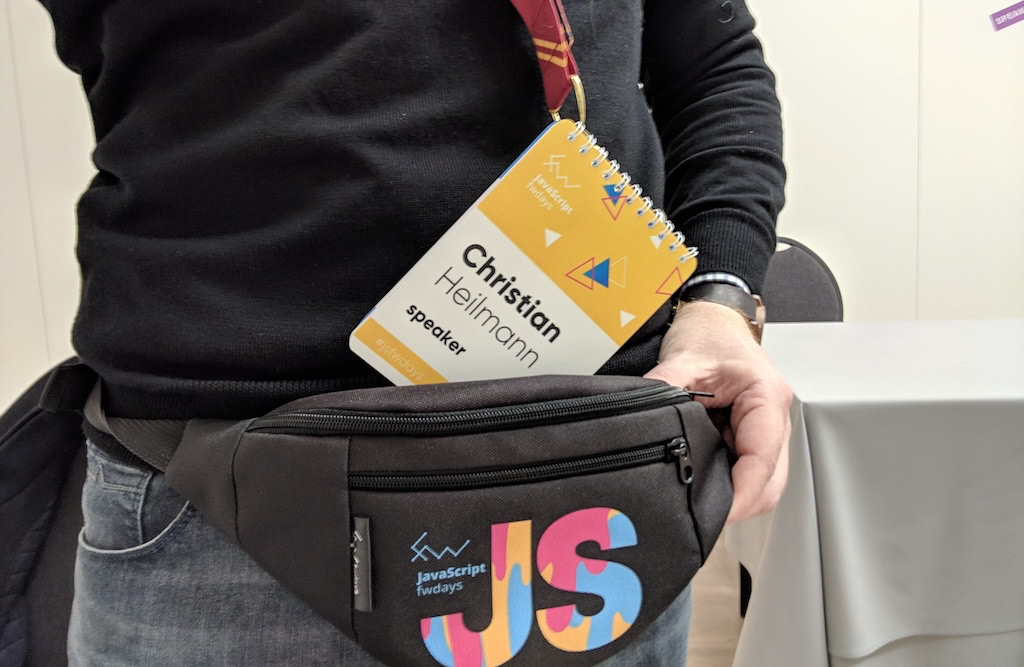
Author: Christian Heilmann
Translated by: Zhuang Qi
As a developer evangelist, much of your job is to go out into the world and tell it about what your company does (or the technologies, techniques, and methods it uses). Your success in this largely depends on how the world sees you – are you a technical master or someone trying to sell their company or certain products? Integrity is your main strength – you must ensure it remains intact. This means, first and foremost, you need to be prepared before going out.
Face the Facts
You will be asked to talk about a new product or feature. Make sure you are up to date on it before you go and talk about it. Don’t promise things that are outside your control. Talk to the product team, meticulously ask them about what’s in the product, what works, what doesn’t, etc. Be as skeptical as possible because that’s the attitude of the people you’re talking to.
Understand the Audience’s Needs
Your communication should be tailored to the audience. People come to listen to you or read your articles with personal agendas – if you meet that agenda, you win. Know what people expect and need, and you can deliver. Otherwise, you need to hope for the best – which is never a good plan.
Attending conferences costs money. Going to free speaking events takes time. Make it worth it for those who do both, and give them something they can take back to their bosses that will impress them. That way they can go to more conferences and your other events.
Example: A long time ago, I had to give a talk about Yahoo BOSS (which no longer exists) to a search engine optimization crowd. They liked the openness of Yahoo’s search index and being able to reorder results, but I also knew that in the country where the talk was happening, Yahoo only had 5% of the search market. I solved this by building Keywordfinder, a tool that used the Yahoo search database to create keywords. Giving them a cool tool to get keywords related to certain topics demonstrated the versatility of BOSS (well, it was).
Have Expert Backup
You can’t be an expert on everything. At best, when giving a talk, try to have an expert nearby to answer tricky questions for you. If there’s no expert at the time, take notes on questions and follow up after consulting. Don’t promise to get back to someone and then forget to do so – that makes you look like you needed to leave quickly! Too many speakers play the “I’ll get back to you” game.
Under no circumstances should you try to bluff or promise things you’re not sure the product team can deliver. You’re here to promote what can be used, not to pressure your colleagues by promising things that don’t exist.
Choose the Right Medium
Your communication should appear in the right format for your target audience. This can be many things: slides, videos, audio, live coding exercises, step-by-step online examples, or streaming.
Tip: My rule of thumb is: the more technical the audience, the less you should use PowerPoint or Keynote. Show how you can code with the product rather than showing how pretty it is or what its workflow is.
Plan for Failure
Things will go wrong, and you need to be prepared. In the case of a talk, do this:
-
Put your slides somewhere: in case your local copy gets lost.
-
Have a USB stick with your data: in case you need to use a wired connection to the AV system’s computer.
-
Be ready to go without your slides but still have a Q&A session.
-
Don’t expect all technical support: bring your own connectors, power cords, network cables
-
Don’t expect to have internet access: if you really need it, also turn on a hotspot on your phone as backup.
-
Aim for resolution independence and expect the worst color settings and low contrast. A good idea is to always leave plenty of borders around your slides, as many projectors will cut off content.
Example: I once gave a keynote at an AI conference where my overall message was that while machines are faster and more efficient than us, they are also not infallible and can amplify our mistakes. It was a conference with a complex stage setup that required me to send my slides in advance for them to play from their computer. The presentation machine crashed quickly, and my slides somehow got out of order. After the first five slides, it went dark and nothing was usable anymore. I walked onto the stage and used the failure of the stage setup as a hook to tell the rest of the story. Halfway through my story, the slides came back on, starting from the wrong one, which gave me an opportunity to talk about what machine learning does with improperly formatted data. The technical issue could have been the end of the keynote, but by rolling with it, I had the audience on my side and brought the message home.

Please indicate reprint: Developer Relations »