Developer Advocate Handbook (3): Learn to Collaborate with Competitors
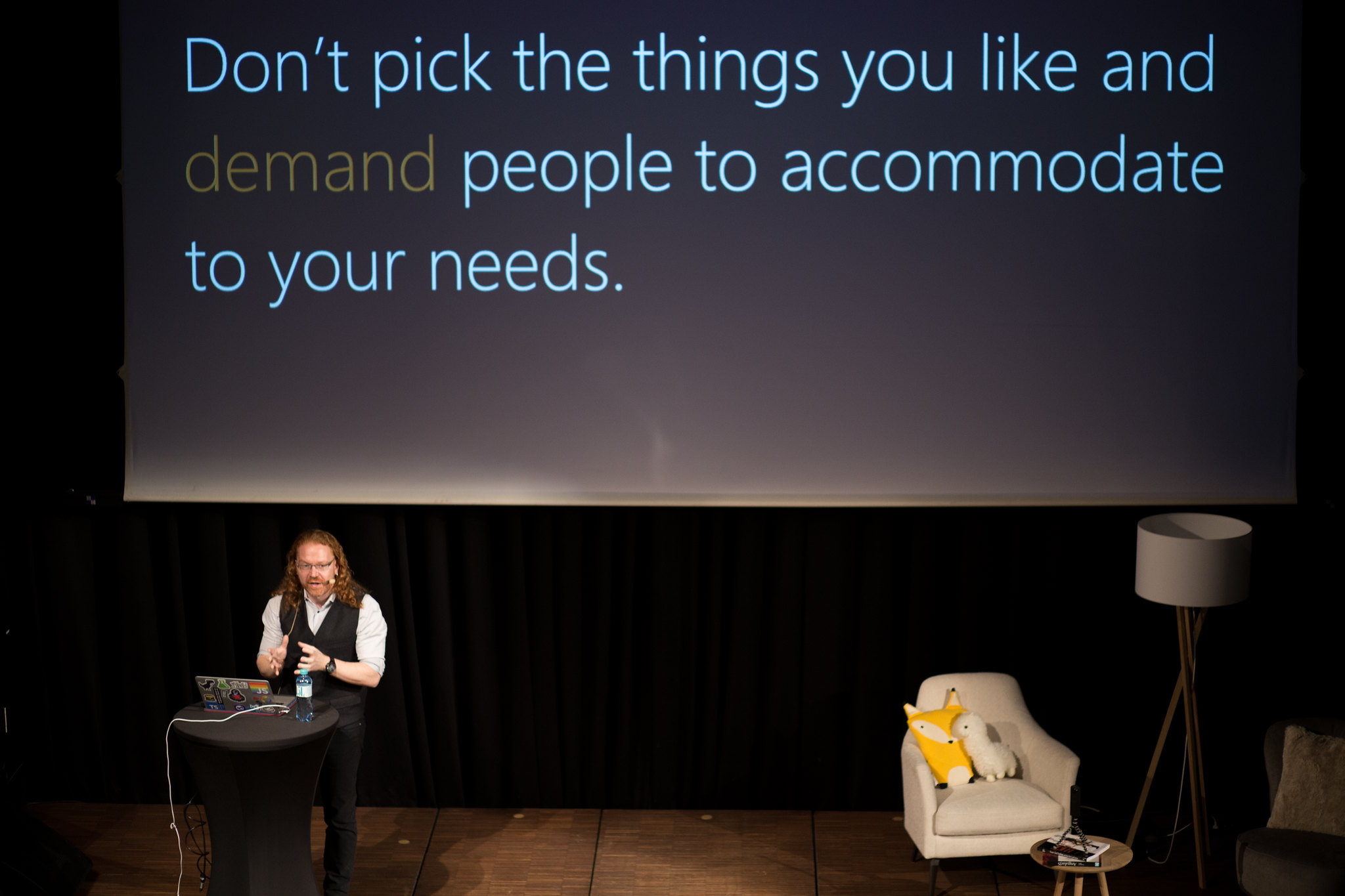
Author: Christian Heilmann
Compiled by: Zhuang Qi
| Collaborating with Competitors
As a Developer Advocate, you must maintain independence. Although you are an expert in your company’s technology field, if you ignore the outside world and only promote technology, you won’t go far.
Fact: Independence and integrity are the most needed qualities for this position. When you choose to abandon them, you will also be abandoned by them. People believe in your judgment because they are interested in what you do, not because of what company you work for.
Once developers are satisfied with solutions and technologies, they will slowly become loyal to the technology. You probably rarely find a developer who can switch back and forth between PHP, Java, Ruby, C#, Python, and between Windows, Unix, and Mac.
Of course, we can also see that developers spend a lot of time arguing that their programming language is more powerful. Although this is actually meaningless, it also shows from the side that developers are full of passion, which is a good thing.
It’s not just programming languages, it’s the same for companies. You’ll encounter Microsoft fanatics, Google enthusiasts, Yahoo fans, Apple disciples, and Adobe followers, who are constantly arguing about which company is best.
All this means that once you start talking only about your company’s brand, you’ll face some unfavorable situations.
You can solve this problem in several ways:
✅ Maintain an independent voice - Talk about everything that excites you, no matter where it comes from.
✅ Become an expert in the field - Master the methodologies needed by the company or programming language.
✅ Keep your finger on the pulse of information - Do daily industry news gathering and introduce to the world what you discover and try.
Interestingly, every company wants to accomplish what you want to achieve—getting developers to happily use their products. Therefore, you need to stay connected and pay attention to competitors, just as it’s important to understand what your own company is doing.
Example: I was part of a JavaScript framework developer group, and something very interesting happened at a conference where everyone represented a certain product. What’s more interesting is that the audience at the conference were fans of different frameworks, and they were very eager to see a battle. So the first thing we did was tell the audience that comparing and arguing was meaningless because all frameworks exist to better serve developers. At the same time, we pointed out what we appreciated about other products and made it into an image, letting the audience learn about each JS library and its competing JS libraries from competitors, thus achieving a win-win situation.
| Respect Competitors
No one can be a developer advocate while attacking competitors. Because we are all professionals dedicated to helping developers complete projects more efficiently. Picking on competitors’ shortcomings is a very cheap approach.
You shouldn’t forget that we work in an industry that moves and shocks the world, but there’s a lot of inflation in it. There are few people in the speaking, training, and advocacy markets, and everyone sees each other all the time. Rather than bothering each other, it’s better to work together.
Showing due respect and interest also means that once you realize you can trust another person, you’ll start sharing ideas, resources, and conference opportunities, even giving each other predictions about upcoming things. This gives everyone an advantage and makes our work easier.
This also means that if you’re not happy at your current company, you’ll have a place elsewhere. Conversely, once a reputation is damaged, it’s hard to shake off, and a bad reputation will follow you.
| Appreciate Competitors
Appreciating competitors is hard for many people to accept, especially for marketing departments. But please listen to my explanation patiently. If a competitor has a better product, you need to learn to acknowledge the good aspects of the competing product. Although this may seem like admitting your own failure, it actually gives you the opportunity to learn from the competitor’s advantages.
✅ You give the impression of valuing technology.
✅ You have a spirit that doesn’t fear competition and likes to meet challenges.
✅ Your competitors will also carefully study your product.
✅ You can understand why users like competing products and feed this back to your product team.
Also remember that designing corresponding products for different audiences might be better. Because products that interest developers may not necessarily be liked by the ultimate target users.
Example: When I just joined Microsoft, I used a MacBook during a presentation, which surprised many people. Because I had gotten used to using a MacBook because of its higher efficiency. And the company was quite open about this and had no objections. Of course, I now use both MacBook and Surface Laptop, and the experience is quite good. However, interestingly, as a Microsoft employee who doesn’t exclusively use their own products, having people ask about this is also a step that the developer advocate job requires.
| Understand Competitors
This is a classic foundational step in marketing, advertising, and development: before you create or promote a product, research the corresponding market and do a competitive analysis.
In terms of developer advocacy, you need to understand what your peers are doing right now, because you’ll constantly be asked questions about competing products, such as “How does this compare to Company Y’s new product X?” This type of question is very common.
If you can answer this question, your technical integrity will be greatly enhanced. Let’s accept competing products and experience them—it’s a pretty good experience.
| Try Competing Products and Build Examples
When trying competitors’ services and products, you can think about the following things:
✅ What do they do well, and can your own product do better in comparison?
✅ Where did you encounter difficulties? This is what needs to be avoided in your own product.
✅ How does it compare to your own product? What are the differences? Remember, these are questions that will be asked, and you need to learn through practice.
✅ How can these services integrate with your own product, and how can they complement each other?
Building something using a brand new API, service, or library also helps improve your own technical integrity. And you can feed back discovered problems to peers responsible for competing products. I do this myself—when I encounter problems, I try to get to know the corresponding people.
If you discover that another company’s new service or product has a good complementary effect on your own product, then promote something that can accommodate both and showcase them. This is beneficial for both sides, letting people see products from different companies mixed together, and you might even discover that your examples are cited in the process of promoting other products.
As a developer advocate, your greatest success is getting developers to talk about the product on their own and actively promote it. That’s why you need to do your best to remove yourself from the company brand and become a role model for people. You should work because you like the company atmosphere, not just for money.

Reposted from: Developer Relations »